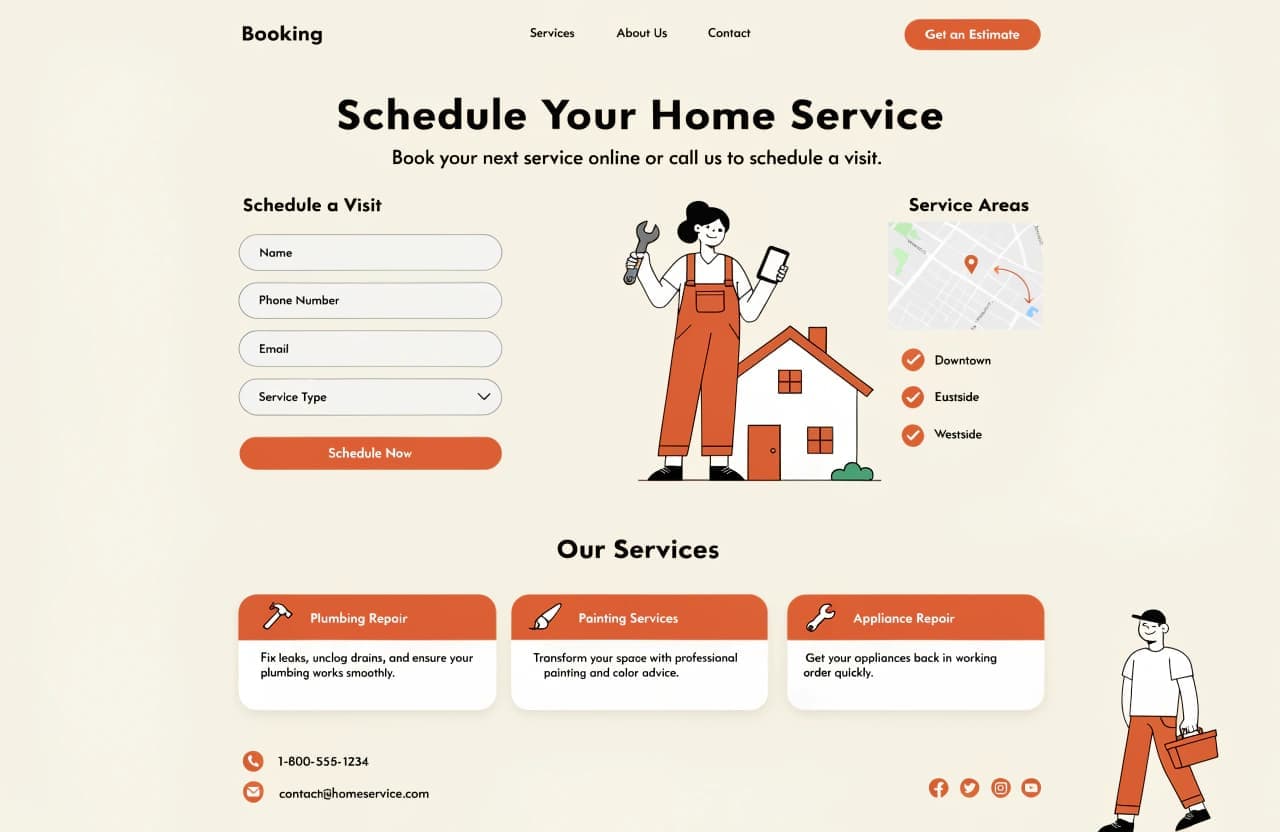
A phone number still matters. Many customers want to call before they commit, especially for urgent jobs or personal services. But a phone number alone is no longer enough for every local service business. Customers now expect to understand the service before they spend time calling.
They want to know what you offer, how appointments work, what the price range may be, when you are available, whether you serve their location, what other customers say, and whether they can book or pay online. A simple booking page can answer many of those questions before the first conversation.
That is important for salons, spas, tutors, cleaners, repair shops, fitness trainers, wellness providers, dental clinics, home service businesses, photographers, consultants, and many other local service owners.
Missed calls become missed customers
Small businesses lose customers in very ordinary ways. The owner is busy with another client. The phone rings during a service visit. A customer calls after hours. Someone checks the business during lunch but cannot talk. Another person wants to compare services quietly before deciding.
If the only action is a phone call, the customer may wait, forget, or choose another business with a clearer booking path. The owner may never know that the opportunity existed.
A booking page helps capture intent when the customer is ready, not only when the owner is free to answer.
Booking pages educate before they sell
A good booking page is not only a calendar. It is a small trust-building system. It explains the service, the process, the options, the preparation, and the next step. That education makes customers more confident and can improve enquiry quality.
- A salon can list haircut, color, facial, bridal, and package services.
- A trainer can list trial sessions, personal training, group classes, and nutrition support.
- A tutor can list subject coaching, exam preparation, online sessions, and consultation calls.
- A cleaner can list standard cleaning, deep cleaning, move-out cleaning, and office cleaning.
- A repair provider can list inspection visits, emergency visits, installation, maintenance, and diagnosis services.
When services are clear, customers stop guessing. They can choose the right option or send a better enquiry.
Peeptown gives owners a practical booking presence
Peeptown Biz helps local service owners create a public profile and add the details customers need. Depending on the plan, owners can add services, booking options, products, catalogues, FAQs, reviews, social links, business hours, contact details, and payment tools.
Paid plans can support online booking and PayPal payment options where available. Premium can add custom domain branding, custom booking forms, advanced SEO and sharing tools, unlimited services, team access, and a stronger professional profile.
This lets a local business go beyond a basic phone listing without building a full custom website from scratch.
Online payment can make bookings more serious
For many service businesses, no-shows and vague enquiries are expensive. A customer may reserve time and then disappear. A paid consultation, deposit, inspection fee, or prepaid session can help protect the owner’s schedule.
Where PayPal is available and connected, Peeptown can support payment options through the owner’s own PayPal setup on eligible plans. That can make the booking feel more complete for the customer and more reliable for the business.
Peeptown does not charge commission on bookings or sales. Payment providers such as PayPal may still charge their own processing fees where payment tools are used, but Peeptown does not take a percentage from the owner’s booking or sale income.
A booking page also improves trust
Trust is not built only by saying the business is good. It is built by making the business feel organized. Customers feel safer when they see real services, clear descriptions, accurate hours, helpful FAQs, current photos, and a proper profile.
This matters even more in service businesses because customers are buying time, skill, and reliability. They may be inviting someone into their home, trusting someone with their health, choosing someone for their child, or booking a personal care appointment.
A maintained booking page says: we are active, we are ready, and we respect your time.
Phone calls still belong in the journey
The point is not to remove the phone. The point is to support it. A customer may still call for complex questions, urgent work, or custom quotes. But a booking page makes the call smarter because the customer already understands the basics.
Some customers will book directly. Others will read first and call with confidence. Some will save the profile and come back later. All of those outcomes are stronger than a bare phone number floating online.
How to build a useful booking page
- List the services customers ask for most often.
- Use plain language, not only internal business terms.
- Add duration, price guidance, deposit rules, or quote notes where useful.
- Explain what happens after booking.
- Add FAQs about preparation, cancellation, payment, location, and response time.
- Use photos that show real trust, not only decoration.
- Keep everything updated when services or availability change.
Premium helps owners look more established
Many local owners feel they need a website before they can take bookings seriously. A website can be valuable, but it can also cost four figures and take time. Peeptown Premium gives owners a faster branded option with custom domain support and stronger profile tools.
That is helpful for a founder who wants to launch quickly, or for an existing business that wants a more professional booking experience without paying commission to every platform forever.
Booking pages help after-hours customers
A large part of local search happens outside normal working hours. Customers research at night, during a lunch break, while commuting, or after remembering a task they need to fix. If the business depends only on phone calls, those moments are easy to lose.
A booking page keeps working when the owner is busy. It lets customers read services, check expectations, send an enquiry, or choose a booking path without waiting for someone to answer. That does not replace human service; it protects the moment when the customer is ready.
For appointment-heavy businesses, this can be the difference between a full schedule and a week filled with missed opportunities.
A better booking page creates better customers
When customers book from a thin listing, they may misunderstand what is included. They may choose the wrong service, expect the wrong price, arrive unprepared, or cancel because they were never fully confident. A richer booking page reduces that risk.
Use descriptions to set boundaries politely. Explain what is included, what may require a quote, what customers should bring, how deposits work, and when the business will confirm. This protects the owner and improves the customer experience at the same time.
That kind of clarity is especially useful for service providers that value their time: salons, clinics, trainers, tutors, cleaners, repair teams, consultants, and home service professionals.
Bookings should fit the way the business actually works
Not every service should be booked the same way. Some businesses need instant appointment requests. Others need quote-first enquiries, paid inspections, deposits, consultations, or custom forms. A beauty appointment is different from an electrical repair visit. A tutoring trial is different from a cleaning quote. A PR consultation is different from a massage booking.
Owners should design the booking path around the real workflow. If the price depends on the job, say that. If the service needs approval before confirmation, explain it. If payment is required to reserve time, make the policy clear. The best booking page does not force every customer into one shape; it guides them into the right next step.
That makes the business feel more professional and helps prevent avoidable misunderstandings.
The booking link becomes a business asset
Once the booking page is ready, owners can share it anywhere customers already are: social media, WhatsApp, email signatures, printed flyers, invoices, Google Business Profile, local groups, and repeat-customer messages. A clear booking link is easier to promote than a phone number alone because it carries the service details with it.
Over time, customers learn where to go when they need the business again. That repeat path is valuable for any local service owner.
The owner who makes booking easier wins more often
Customers reward convenience. They choose the business that helps them understand, trust, and act. A phone number can start a conversation, but a booking page can carry the customer further.
For local service businesses, Peeptown can become the place where discovery turns into action: service details, trust, booking, payment options, and direct customer contact in one profile.
FAQ
Do local businesses still need a phone number?
Yes. Phone contact is still important, but a booking page adds service details, FAQs, trust signals, and an action path for customers who are not ready to call.
Can Peeptown support online bookings?
Yes, online booking features are available on eligible paid plans, along with service listings and profile tools.
Can customers pay with PayPal?
Where PayPal is available and connected, eligible paid plans can support PayPal-based payment options.
Why is no commission important?
Commission reduces owner income over time. Peeptown does not charge booking or sales commission, though payment processors may charge their own fees.